

We are increasingly paying attention to what we eat, how food is produced and the impact our choices have on the environment. However, when reading a label or looking at a menu, it is common to come across concepts that seem synonymous yet conceal important nuances. Understanding what lies behind each term helps us to fill our plates more wisely.
Although everyone usually relates to a more responsible and healthier diet, they do not have the same guarantees, regulations or production methods. Do you really know what you are ordering? We will tell you.
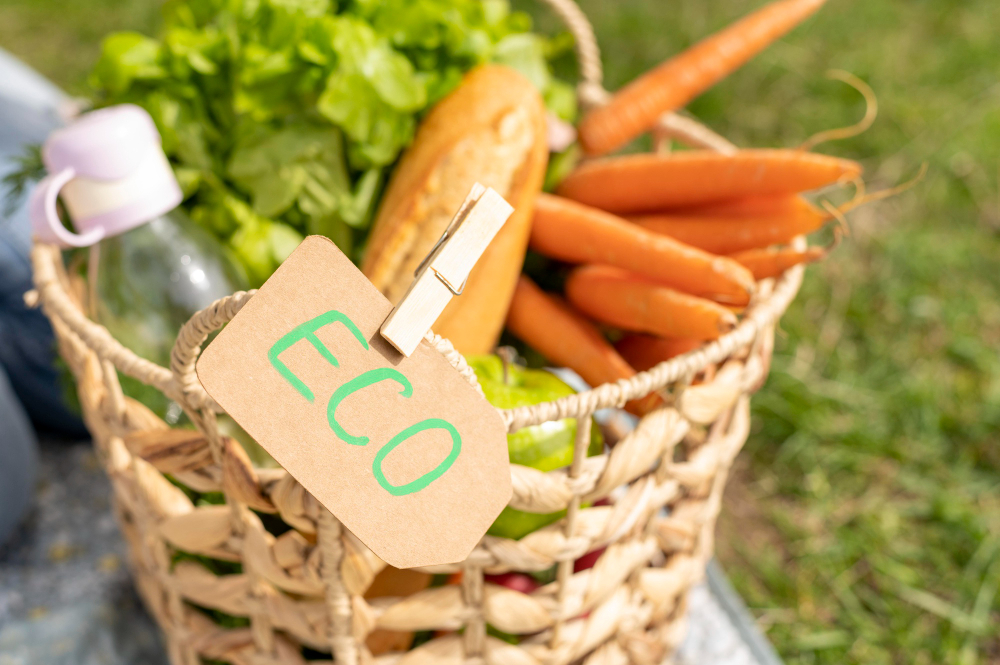
What does it mean for a food to be organic?
A organic food it is one that has been produced following strict regulations designed to reduce environmental impact and respect the cycles of nature.
- – In the countryside: The use of synthetic chemical pesticides and fertilisers is restricted, promoting biodiversity and protecting soil fertility.
- – In livestock farming: Adequate nutrition, access to outdoor spaces and living conditions adapted to animal welfare are guaranteed.
For a product to be sold under this label, a statement of intent is not enough: it must comply with very strict legal regulations and pass regular inspections by authorised bodies.
And what about organic produce?
The term organic it tends to cause some confusion due to its origin.
In Spain and the European Union, the words ecological, organic and biological are legally used as synonyms to refer to the same certified production system. The difference is merely linguistic: in Anglo-Saxon countries, it is preferred organic, while in our environment we are more familiar with ecological.
Therefore, in European practice, both refer to the same standard of quality and environmental respect. What is truly decisive is not the chosen word, but the presence of a official certification.
The «natural» concept: broad but without ecological guarantees
This is where we must pay special attention. term natural it is much more ambiguous and commercial.
It is usually used to describe foods that are minimally processed or made with recognisable ingredients. However, Just because something is natural doesn't mean it's eco-friendly. A jam can be considered natural due to the simplicity of its ingredients (fruit and sugar), but if that fruit comes from conventional crops where chemical treatments have been used, it does not have organic certification.
- – Ecological: It complies with legal regulations and passes strict production controls.
- – Natural: Highlight the simplicity or the origin of the ingredient, but without a guarantee of sustainable or certified production.
How to identify what we buy (and eat)
To avoid getting lost among labels and commercial claims, it is worth focusing on key details:
- – The certification mark: It is the only official guarantee for organic products.
- – The list of ingredients: The shorter and more understandable it is, the better we know its actual composition.
- – The origin and traceability: Knowing where the product comes from helps to assess its impact.
- – The degree of processing: A food can be organic and, at the same time, ultra-processed. It is worth looking beyond the agricultural origin.
Is it better to choose organic?
Los organic products they are an excellent option for supporting environmentally friendly production models and reducing the presence of chemical residues in the diet. However, the ecological is not an automatic synonym for either health or absolute sustainability.
A truly balanced and mindful diet goes far beyond a label. To evaluate what we put on our plate, it is worth taking into account other key factors:
- – Industrial treatment: What a snack, Just because a biscuit or a ready meal has the organic label does not make it healthy if it is packed with free sugars, refined flours or low-quality fats. An ultra-processed organic product is still an ultra-processed product.
- – The origin and the «zero kilometre» concept: A tomato grown under strict organic standards on the other side of the world will have generated a much higher carbon footprint from its transport than that of a traditional local crop. Sometimes, prioritising local and seasonal produce is a more sustainable decision.
- – General equilibrium: The priority must always be to stock the larder with fresh, varied and seasonal food, with minimal or zero processing.
The ideal is to learn to appreciate the whole picture: the actual quality of the raw material, its local origin, the optimum time of year to consume it, and the honesty in the way it is prepared. Ultimately, it is about finding an intelligent balance between health, respect for the planet and enjoyment.
The commitment of Tapería Astrid
Understanding these differences allows us to better interpret what we consume and make more conscious decisions. Ultimately, beyond the labels, what truly matters is knowing the origin of the ingredients and committing to careful cooking.
A Tapería Astrid We believe that eating well starts with selecting excellent raw ingredients and treating them with the respect they deserve. Our menu combines flavour, quality produce and dishes designed to be enjoyed without a rush.
Would you like to find out? Book your table and come and enjoy mindful, tasty cuisine prepared with carefully selected ingredients.