


Every time you taste a fermented dish of vegetables, pulses or grains, you are feeding much more than your stomach: you are supporting your gut microbiota, that microscopic universe which plays a fundamental role in your digestion, your mood and your overall wellbeing. How to include it in your daily vegan menu?
At Astrid Organic Tapería, we believe that conscious eating is not only about what you choose, but also about how do you make it y what effect it has on you. Today we are going to explore together what are plant-based probiotics and in what ways they can make a real difference to your digestive health.

What are probiotics (and what differentiates them from prebiotics)
Los probiotics they are live microorganisms, mainly bacteria and yeasts, which, when ingested in adequate amounts, provide a direct health benefit. Their main function is to populate the intestine and help restore the balance of the gut flora. Think of them as the beneficial «soldiers» that defend your digestive system, improve nutrient absorption and fight off harmful microorganisms.
On the other hand, the prebiotics they are not living organisms, but food components, almost always indigestible fibre. Their role is to act as «food» for those probiotics and for the beneficial bacteria that already exist in your gut. By nourishing these microorganisms, prebiotics help them to proliferate and remain active and healthy.
In short, probiotics are the beneficial microorganisms, while prebiotics are their food. Together, they create a perfect synergy to maintain a strong and balanced gut ecosystem.
What are plant-based probiotics?
When we talk about plant-based probiotics we are referring to those fermented plant-based foods that contain beneficial microorganisms, without using animal products. Some examples are the sauerkraut, kimchi, miso, kombucha or fermented plant-based yoghurts.
These foods, besides being a direct source of probiotics, they are usually loaded with other essential nutrients. They contain fibre, which acts as a prebiotic (the food for probiotics), vitamins and others bioactive compounds which not only nourish the microbiota, but also enhance its beneficial effect in the gut. By consuming them, you help your body maintain optimal intestinal balance.
Benefits of plant-based probiotics for your digestive health
Plant-based probiotics not only help to maintain a balanced gut flora, but also aid digestion and nutrient absorption, and strengthen the immune system. Incorporating them into your daily diet is a natural way to look after your health from the inside out. Below, we explain its benefits:
- They improve the balance of the gut microbiota. When this flora is altered (by antibiotics, stress, a poor diet), plant-based probiotics help to restore it.
- - They aid digestion and reduce discomfort. They can relieve bloating, gas, constipation or diarrhoea.
- -They promote better nutrient absorption. A healthy gut absorbs vitamins and minerals much better.
- -They reinforce the immune system. A good microbiota is closely linked to a better immune response.
Vegan foods rich in natural probiotics for your daily vegan menu
Include plant-based probiotics in your daily vegan menu it doesn't have to be complicated or boring. There are many 100 % plant-based fermented foods that you can easily incorporate into everyday dishes, both hot and cold, sweet or savoury.
These foods, as well as adding flavour and character to your recipes, contribute to restore and maintain the balance of your gut microbiota, strengthen your immune system and improve digestion. Here are some of the most accessible and effective ones:
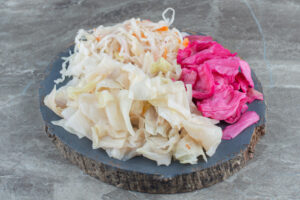
- - Sauerkraut (fermented cabbage): it is a classic source of beneficial lactic acid bacteria. Its crunchy texture and slightly sharp taste make it ideal as a side dish or topping in plant-based dishes. Rich in vitamin C and digestive enzymes.
- - Kimchi (spiced fermented vegetables): typical of Korean cuisine, it combines cabbage, carrot, garlic, ginger and chilli. It is a veritable flavour and healthy bacteria bomb, as well as providing antioxidants, fibre and a spicy kick that stimulates the digestive system.
- - Miso and tamari: both derived from soybean fermentation. Miso is used as a paste for soups and sauces, while tamari is a sauce similar to soy sauce but milder. They contain enzymes and probiotic bacteria and help to balance the gut, especially when added at the end of cooking so as not to destroy their benefits.
- - Kombucha: This fermented drink made from black or green tea and sugar, fermented with a SCOBY (symbiotic culture of bacteria and yeasts), is refreshing, slightly tart and naturally fizzy. Ideal as a healthy substitute for industrial soft drinks.
- - Fermented plant-based yoghurt: made with a coconut, soya or almond base, it must contain live cultures to be truly probiotic. It provides creaminess, helps with gut balance and is perfect for breakfasts, desserts or healthy snacks.
- - Natural pickles (without pasteurised vinegar): Naturally brined fermented gherkins, carrots or cauliflower are an excellent source of beneficial microorganisms, provided they have not been pasteurised. They add a tangy, crunchy touch to salads or main dishes.
In conclusion, in Astrid Organic Tapas Bar we invite you to taste the power of vegetable ferments. If you fancy something that nourishes your body and your microbiota, don't miss our suggestions. Come to our restaurant or place your order online and discover how these tiny microorganisms can give you great benefits if you include them in your vegan daily set menu.